Booking a flight usually feels straightforward. You choose your destination, compare prices, pick a seat, and finally reach the checkout page feeling almost done. That’s when it happens. Just before payment, an extra option appears — flight protection.
It sounds important, slightly urgent, and easy to add with one click. This is the exact moment many travelers pause and start wondering whether they really need it.
The hesitation is natural. No one wants to overpay, especially when flights are already expensive. At the same time, no one wants to be stuck with a non-refundable ticket if plans change.
The wording at checkout often makes it feel like skipping protection is risky, even if you’re not sure what you’re actually paying for. This is where confusion begins.
This is also why Expedia flight protection raises so many questions. Is it real protection or just another add-on? Does it actually help when a flight is canceled or delayed, or does it come with conditions that make refunds difficult?
Travelers often don’t have time to read fine print at checkout, which leads to rushed decisions — and later regret.
Some people add protection for peace of mind. Others skip it, assuming airline policies or credit cards will cover everything. Both choices can be right or wrong depending on the situation.
That’s the problem: there’s no one-size-fits-all answer, and most booking pages don’t explain that clearly.
This article breaks it all down without pressure or hype. It explains what Expedia flight protection actually covers, when it can genuinely help, and when it’s not worth the extra cost.
If you’ve ever stared at the checkout screen unsure whether to click “Add Protection” or move on, this guide is meant to give you clarity before you decide.
What Is Expedia Flight Protection, Really?

At its core, Expedia flight protection is not a refund promise from the airline and not a magic safety net that covers every possible issue. It is a travel protection plan offered during checkout that is backed by a third-party insurance provider, not Expedia itself, and not the airline you’re flying with. This detail matters more than most travelers realize.
In simple terms, when you add flight protection on Expedia, you are buying an insurance-style policy. If something goes wrong and your situation fits the coverage rules, you may be eligible for reimbursement.
That reimbursement usually comes after you file a claim, submit documents, and wait for approval. It is not the same as instantly getting your money back when plans change.
This is where many people get confused, so let’s clearly separate the three things travelers often mix up.
Flight protection covers specific problems listed in the policy, such as certain cancellations, long delays, or missed connections. It works through claims and reimbursements, not instant refunds.
Airline refunds come directly from the airline. These apply when flights are canceled by the airline, significantly delayed, or covered under flexible fare rules. Airline refunds are usually faster and simpler — but only if your ticket qualifies.
Travel insurance is broader. It may include medical coverage, baggage loss, emergency evacuation, and full trip interruption protection. Expedia flight protection is more limited and mainly focused on the flight portion.
So why does Expedia push this option at checkout? Because it’s the moment travelers are most aware of risk. You’re about to pay, your trip feels real, and the idea of something going wrong suddenly feels expensive. Adding protection feels like a small extra cost compared to losing the entire ticket.
For travelers who feel unsure, having questions at this stage is normal. If you’re stuck trying to understand whether protection makes sense for your booking, it can help to speak with someone directly.
Some travelers choose to get clarity before paying by calling +(188)848-12120 or +(188)839-30526 to understand how coverage compares with airline refund options.
Understanding what Expedia flight protection truly is — and what it is not — makes the decision much easier and avoids disappointment later.
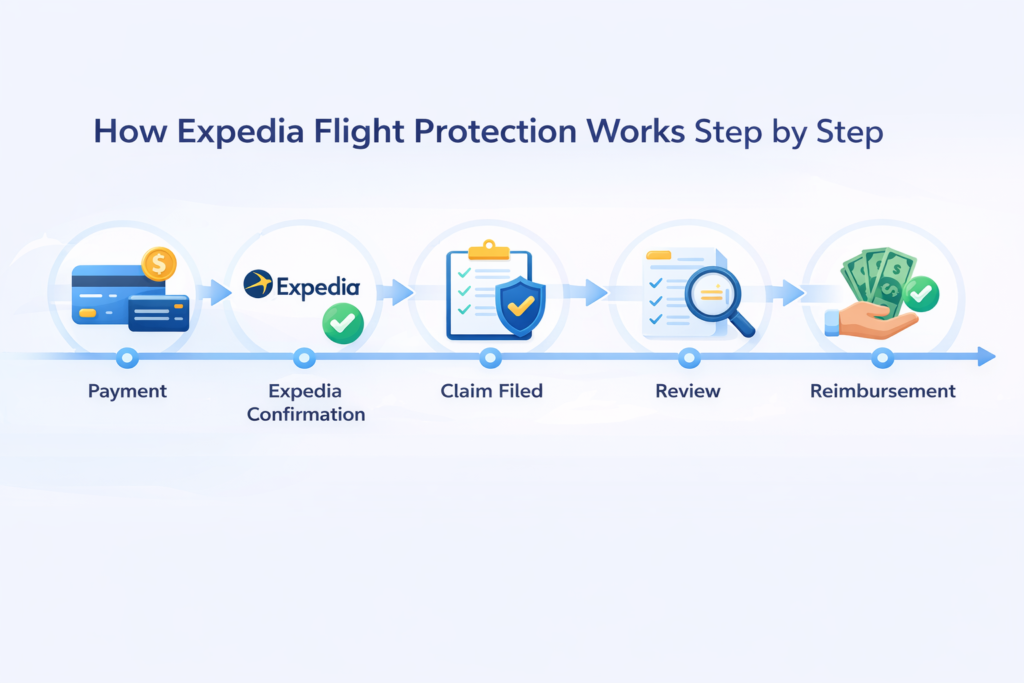
How Expedia Flight Protection Works Step by Step
Understanding how Expedia flight protection works after you click “Add Protection” is key to avoiding confusion later. Most frustration comes from assuming it works like an instant refund, when in reality it follows a structured process.
Selecting Protection at Checkout
During booking, flight protection appears as an optional add-on just before payment. You can choose to include it or skip it. Once selected, the cost is added to your total fare. At this point, many travelers assume they are “covered for anything,” but coverage is limited to specific scenarios listed in the policy.
Payment and Confirmation
After payment is completed, you receive two confirmations:
- Your flight booking confirmation from Expedia
- A separate confirmation email or document for flight protection from the insurance provider
This separation matters. Expedia manages the booking, but the protection is handled by the third-party insurer. Expedia does not approve claims or issue payouts.
What Happens After Purchase
Once purchased, flight protection stays attached to your booking. You don’t need to do anything unless something goes wrong. If your flight is delayed, canceled, or disrupted, you’ll need to check whether the situation qualifies under the coverage terms before filing a claim.
How Claims Are Filed
Claims are filed online through the insurance provider’s portal. You’ll be asked to submit documents such as:
- Proof of flight cancellation or delay
- Medical documents (if illness is the reason)
- Booking receipts and ticket details
Missing or incorrect documents are one of the most common reasons claims get delayed or denied.
Timeframe for Approvals
Claims are not instant. Approval can take anywhere from a few days to several weeks, depending on the case and documentation. Reimbursements, when approved, are usually processed after the claim is fully reviewed.
Common Misunderstandings Travelers Have
- Assuming protection guarantees a full refund
- Thinking Expedia handles the claim directly
- Believing protection covers personal changes of plans
- Expecting immediate payout
Many travelers only realize these differences when something goes wrong. If there’s uncertainty during a disruption, some people prefer to speak to a real person for clarity before filing claims.
Support numbers like +(188)848-12120 or +(188)839-30526 are often used to understand next steps before submitting paperwork.
Knowing how Expedia flight protection works step by step sets realistic expectations — and that alone can prevent a lot of frustration later.
What Expedia Flight Protection Covers (The Good Part)
This is the part most travelers care about — what Expedia flight protection actually helps with when things don’t go as planned. While it doesn’t cover everything, there are situations where it can be genuinely useful, especially for non-refundable tickets.
Covered Scenarios
Flight Cancellations Due to Illness
One of the most common covered reasons is illness. If you or, in some cases, a close family member becomes seriously ill and you’re unable to travel, flight protection may apply.
This usually requires medical documentation, such as a doctor’s note, stating that travel was not advised. Minor sickness or general discomfort typically does not qualify.
Delays Beyond a Certain Time
Long delays are another area where Expedia flight protection can help. If your flight is delayed beyond the minimum time specified in the policy, you may be eligible for compensation.
This could apply to weather disruptions, technical issues, or airline operational problems. The exact delay threshold matters, which is why reading that section of the policy is important.
Missed Connections
If a delay causes you to miss a connecting flight and it’s not something you caused yourself, protection may cover the loss.
This is particularly helpful for travelers with tight layovers or multi-segment itineraries where one small delay can ruin the entire trip.
Airline Schedule Changes
Significant schedule changes made by the airline — especially those that result in missed connections or unusable flights — may also fall under coverage.
In some cases, the airline will handle rebooking, but protection can step in when refunds or alternatives are limited.
What “Covered” Actually Means
This is where expectations need to stay realistic.
Reimbursement vs Refund
Coverage usually means reimbursement, not an instant refund. You pay for a replacement ticket or absorb the loss first, then file a claim.
If approved, the insurer reimburses you up to the allowed amount. This process can take time and requires proof.
Limits and Caps Explained Simply
Every policy has limits. There may be a maximum amount per passenger, per trip, or per claim type. Even if your ticket costs more, reimbursement may stop at the policy cap.
This is one reason protection may feel helpful for mid-priced flights but less useful for very expensive bookings.
Documentation Required
Claims depend heavily on paperwork. Missing documents — such as airline delay confirmations or medical notes — can lead to denial. Keeping emails, receipts, and official airline notices becomes crucial.
If a situation feels unclear, many travelers choose to double-check coverage details before filing a claim by calling +(188)848-12120 or +(188)839-30526.
Understanding what Expedia flight protection truly covers — and how — makes the difference between smooth reimbursement and unnecessary frustration.
What Expedia Flight Protection Does NOT Cover (Very Important)
This section is just as important as knowing what’s covered — if not more. Many travelers feel disappointed with Expedia flight protection, not because it failed, but because expectations didn’t match reality.
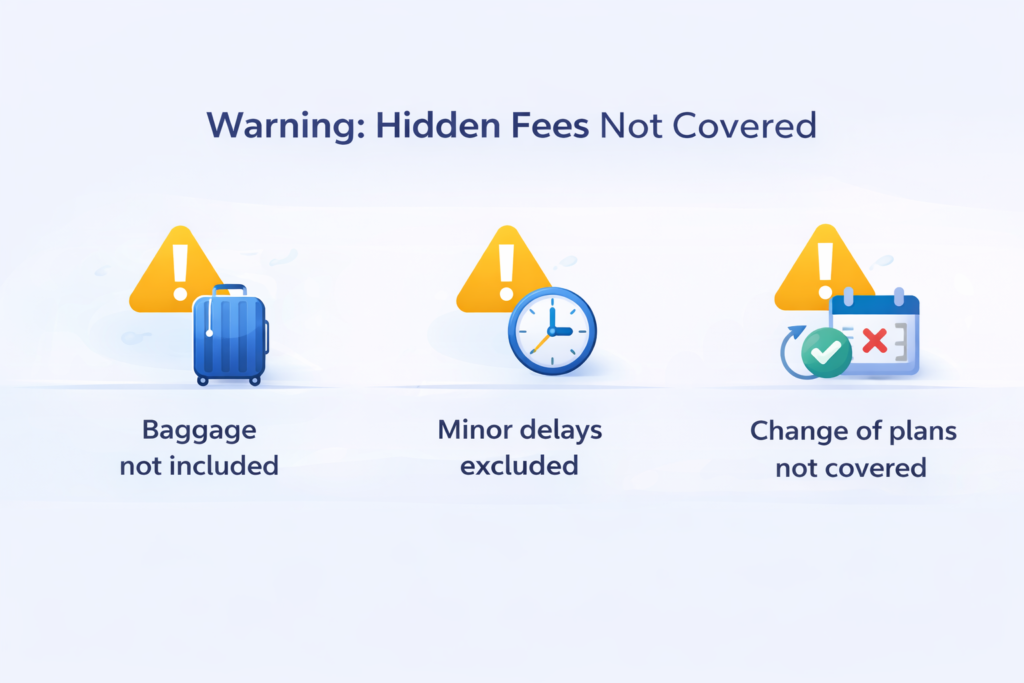
Most denials happen due to misunderstandings around exclusions and fine print.
Change of Mind Is Not Covered
One of the biggest assumptions people make is that flight protection allows free cancellation for any reason. It does not. If you simply decide not to travel, change vacation plans, or no longer feel like taking the trip, protection will not apply.
Unless the policy specifically includes a “cancel for any reason” clause (which most do not), a change of mind is excluded.
Finding a Cheaper Flight Later
Another common scenario that is not covered is discovering a cheaper flight after booking. Price drops, sales, or better deals elsewhere do not qualify for reimbursement.
Expedia flight protection is designed for disruptions, not regret.
Minor Delays
Short delays — even if inconvenient — usually don’t meet the minimum threshold for compensation. A one- or two-hour delay is frustrating, but unless it crosses the policy’s defined time limit, it won’t qualify.
This is one of the most overlooked details and a frequent source of denied claims.
Fine-Print Limitations to Watch For
Policies often include specific language that narrows coverage:
- Pre-existing medical conditions may be excluded
- Certain weather-related events may require proof
- Self-caused issues (late arrival at the airport, missed check-in) are excluded
- Claims must be filed within strict time windows
Skipping these details is risky, especially for expensive or international trips.
Why Many Travelers Get Denied
Denials usually happen for three reasons:
- The situation isn’t covered
- Required documentation is missing
- Deadlines were missed
In many cases, travelers assume coverage exists when it doesn’t. Marketing language at checkout emphasizes peace of mind, but the actual policy language is much more precise.
Realistic Expectations vs Marketing Language
The phrase “flight protection” sounds broad and reassuring, but it’s not unlimited protection. It’s targeted coverage with conditions. Understanding this upfront prevents frustration later.
If there’s uncertainty about exclusions before or after booking, some travelers choose to speak with support to clarify coverage details. Numbers like +(188)848-12120 or +(188)839-30526 are often used to get clarity before assuming a claim will be approved.
Knowing what Expedia flight protection does not cover is the key to deciding whether it’s worth adding — or better skipped altogether.
Expedia Flight Protection vs Airline Refund Policies
One of the biggest reasons travelers hesitate at checkout is uncertainty about whether airline refunds alone are enough.
To decide if expedia flight protection is worth adding, it helps to clearly understand how it compares with airline refund policies — and where each option works better.
When Airline Refunds Are Better
Airline refunds are usually the best outcome when they apply. If an airline cancels a flight, makes a major schedule change, or significantly delays a departure, most airlines are required to offer a refund or free rebooking.
This process is often faster and more straightforward than filing an insurance claim.
Flexible fares also tilt the advantage toward airlines. Tickets labeled “refundable” or “flexible” typically allow changes or cancellations with little to no penalty.
In these cases, adding flight protection often duplicates coverage you already have.
For travelers who book directly with airlines and choose flexible fare types, airline refund policies are usually enough.
When Airline Refunds Fail
Problems start when tickets are non-refundable, which is common with discounted fares. If you cancel for personal reasons, most airlines will not refund the ticket, regardless of how early you cancel.
Medical issues, missed connections due to delays, or disruptions outside the airline’s control may also leave you with limited options.
This is where airline refunds fall short — they protect the airline’s obligations, not the traveler’s circumstances.
Basic Economy vs Flexible Fares
Basic economy tickets are the most restrictive. They usually don’t allow changes, seat selection, or refunds. Once booked, you’re locked in. Flexible fares cost more upfront but offer peace of mind.
For travelers choosing basic economy to save money, expedia flight protection can feel like a safety net. It doesn’t make the ticket flexible, but it may reduce financial loss in covered situations.
Why Expedia Flight Protection May Feel Safer for Some Travelers
Flight protection appeals most to travelers who:
- Book non-refundable fares
- Have uncertain schedules
- Are traveling internationally
- Have tight connections
It doesn’t replace airline refunds, but it adds another layer of protection when airline policies stop helping.
| Scenario | Airline Refund | Expedia Flight Protection |
|---|---|---|
| Airline cancels flight | ✔ Yes | ✖ Not needed |
| Personal illness | ✖ Usually no | ✔ May apply |
| Change of mind | ✖ No | ✖ No |
| Long delay | ✔ Sometimes | ✔ Sometimes |
If a situation feels unclear, travelers sometimes check both airline rules and protection coverage before deciding. In such cases, speaking to someone directly via +(188)848-12120 or +(188)839-30526 can help clarify which option offers better protection.
Understanding this comparison helps decide whether expedia flight protection adds real value — or just extra cost.
Expedia Flight Protection vs Full Travel Insurance
At checkout, expedia flight protection often looks like a simple, affordable way to stay covered. But many travelers wonder how it compares to full travel insurance — and whether one can replace the other. The short answer is that they serve very different purposes.
Scope Difference Explained Simply
Expedia flight protection is narrow in scope. It focuses mainly on flight-related disruptions such as cancellations, long delays, or missed connections under specific conditions. It does not aim to protect the entire trip.
Full travel insurance, on the other hand, is much broader. It covers the trip as a whole — from departure to return — and includes situations beyond just the flight.
Medical Coverage
This is one of the biggest differences. Expedia flight protection usually offers limited or no medical coverage. If you fall sick during the trip, get injured, or need emergency care, flight protection won’t help much.
Full travel insurance typically includes:
- Emergency medical expenses
- Hospitalization
- Emergency evacuation
For international travel, this coverage alone can justify the cost of full insurance.
Baggage and Trip Interruption
Flight protection may offer limited help if delays cause missed connections, but it generally doesn’t cover:
- Lost or delayed baggage
- Stolen items
- Trip interruptions after arrival
Full travel insurance usually covers these areas, along with hotel stays, replacement items, and rebooking costs.
Price Comparison
Expedia flight protection is usually cheaper because it covers less. It’s priced per trip and often feels like a small add-on.
Full travel insurance costs more, but that price reflects the wider coverage. For longer trips or international travel, the difference in value becomes clear.
Who Should Choose What?
Choose expedia flight protection if:
- You’re booking a short trip
- Your main concern is losing a non-refundable flight
- You don’t need medical or baggage coverage
Choose full travel insurance if:
- You’re traveling internationally
- You want medical and baggage protection
- Your trip involves multiple bookings
If you’re unsure which option fits your trip, getting clarity before booking can save money later. Many travelers choose to discuss options directly via +(188)848-12120 or +(188)839-30526 to avoid overlapping coverage.
The key is understanding that Expedia flight protection is not a replacement for full travel insurance — it’s a lighter, more focused layer of protection.
Real-World Scenarios: When Expedia Flight Protection Is Worth It
While Expedia flight protection is not necessary for every trip, there are real-world situations where it can genuinely make sense. The value depends less on the traveler and more on the type of booking.
International Travel Example
International flights are expensive and often non-refundable. A single disruption can turn into a major loss, especially when visas, connecting flights, or long-haul schedules are involved. If an illness or major delay prevents travel, airline refunds may not apply.
In these cases, Expedia flight protection can help recover at least part of the cost, making it a practical option for long-distance trips.
Tight Connection Flights
Flights with short layovers carry higher risk. Even a small delay can cause a missed connection and derail the entire journey. While airlines sometimes assist, they’re not always obligated to refund. Protection can help cover losses when delays cause missed onward flights.
Non-Refundable Tickets
Many travelers choose non-refundable fares to save money. Those savings come with risk. If plans change due to illness or covered disruptions, airline refunds won’t apply. This is one of the clearest cases where Expedia flight protection adds value — not by making the ticket flexible, but by limiting financial loss.
Travelers With Uncertain Schedules
Work travel, family responsibilities, or unpredictable commitments can make travel plans uncertain. If there’s a real chance that something outside your control could disrupt the trip, protection can offer peace of mind.
For travelers unsure whether protection fits their situation, discussing options before booking can help. Some choose to call +(188)848-12120 or +(188)839-30526 to clarify coverage details before deciding.
In the right scenarios, Expedia flight protection isn’t a waste — it’s a calculated choice.
Real-World Scenarios: When Expedia Flight Protection Is NOT Worth It
Just as there are situations where expedia flight protection makes sense, there are also many cases where it adds little to no value. Knowing when to skip it can save money without increasing risk.
Flexible Tickets Already Cover You
If you’ve booked a refundable or flexible fare, flight protection is usually unnecessary. These tickets allow cancellations or changes with minimal penalties, and refunds are handled directly by the airline. In this case, adding protection often duplicates benefits you already paid for.
Short Domestic Flights
For short domestic trips, the risk is usually lower. Delays are easier to manage, replacement flights are cheaper, and airlines are more likely to offer rebooking options. Paying extra for protection on a low-cost, short-haul flight often doesn’t provide enough value to justify the cost.
Travelers With Airline Elite Status
Frequent flyers with elite status already receive benefits like free changes, priority rebooking, and better customer support during disruptions. These travelers often have built-in protection through loyalty programs, making expedia flight protection less necessary.
Credit Card Travel Protection Overlap
Many premium credit cards include travel protection benefits such as trip cancellation, delay coverage, and lost baggage reimbursement.
If you booked your flight using such a card, you may already be covered. Adding protection on top of that can lead to overlap without extra benefit.
When unsure about existing coverage, some travelers choose to double-check by reviewing card benefits or speaking to support via +(188)848-12120 or +(188)839-30526 before adding anything extra.
In these situations, Expedia flight protection is often more costly than value — and skipping it is the smarter choice.
Cost Breakdown – How Much Expedia Flight Protection Really Costs
One reason expedia flight protection feels tempting is the way it’s priced. At checkout, the cost often looks small compared to the total flight price. But understanding how that number is calculated — and what you get in return — helps put the value into perspective.
Average Pricing Range
The cost of expedia flight protection usually falls within a percentage of the total ticket price rather than a fixed amount. For cheaper domestic flights, it may seem minimal. For international or premium tickets, the price increases accordingly. This pricing structure makes protection feel affordable at first glance, even though it can add up over time.
Why the Price Changes Per Trip
Protection pricing isn’t random. It depends on several factors:
- Ticket cost
- Route type (domestic vs international)
- Number of passengers
- Trip length
Higher-risk trips naturally come with higher protection costs. That’s why the same traveler may see very different prices on different bookings.
Cost vs Value
The real question is not how much it costs, but what you get back if something goes wrong. For a low-cost flight, paying extra for protection may not make sense — replacing the ticket could be cheaper than the protection itself. For expensive non-refundable bookings, the cost can feel justified as a form of risk management.
Psychological Pricing at Checkout
Protection is offered at the most emotional moment — right before payment. At that point, adding a small amount feels safer than risking a full loss.
This is intentional. The wording and placement are designed to nudge decisions quickly.
If there’s doubt, taking a moment to pause and review coverage — or calling +(188)848-12120 or +(188)839-30526 for clarity — can prevent unnecessary spending.
In the end, Expedia flight protection isn’t expensive by accident. It’s priced to feel easy to add — but whether it’s worth it depends entirely on the trip.
Common Mistakes Travelers Make With Expedia Flight Protection
Most negative experiences with expedia flight protection don’t come from the product itself — they come from simple mistakes travelers make before or after booking. Avoiding these can make the difference between a smooth claim and a frustrating denial.
Not Reading Coverage Limits
One of the most common mistakes is skipping the coverage details. Travelers often assume protection covers the full ticket cost, but most policies include caps and limits. If the ticket price exceeds the maximum reimbursement amount, the difference comes out of pocket. Reading these limits ahead of time sets realistic expectations.
Assuming Instant Refunds
Many people expect flight protection to work like an airline refund. It doesn’t. Claims are processed through the insurer, not instantly through Expedia or the airline. Reimbursement can take days or weeks, depending on documentation and review time. Expecting immediate refunds often leads to disappointment.
Confusing Airline Responsibility With Protection
Airlines are responsible for cancellations they cause. Flight protection applies only when coverage conditions are met. Mixing these two leads to confusion about who should issue refunds or rebook flights. Knowing which party handles which situation helps avoid unnecessary delays.
Missing Claim Deadlines
Every protection policy has strict deadlines for filing claims. Waiting too long, even by a few days, can result in denial. Travelers who don’t act quickly often lose valid claims.
If something goes wrong and there’s uncertainty about next steps, some travelers choose to speak with support early by calling +(188)848-12120 or +(188)839-30526 to avoid missing critical steps.
Avoiding these mistakes makes expedia flight protection far more useful when it’s actually needed.
Leave a Reply